What to Eat After Wisdom Teeth Removal: A Week-by-Week Food Guide
Not sure what you can eat after wisdom teeth removal? Get a clear week-by-week food guide, the best soft foods for healing, and exactly what to avoid to protect your recovery.
what to eat after wisdom teeth removal
Food is one of the first things patients worry about after wisdom teeth removal — and for good reason. What you eat in the first week directly affects how well you heal. The wrong choices can dislodge the blood clot forming in the extraction socket, causing dry socket — one of the most painful complications of the procedure. The right choices support healing, keep you comfortable, and make a frustrating few days significantly easier.
This guide tells you exactly what to eat at each stage of recovery, what to avoid and why, and how to make soft-food eating feel less like a medical protocol and more like a manageable — even enjoyable — few days.
The Short Answer: Foods Safe Immediately After Surgery
If you need a quick reference right after your procedure, start here. These foods are safe from the moment you get home on day one:
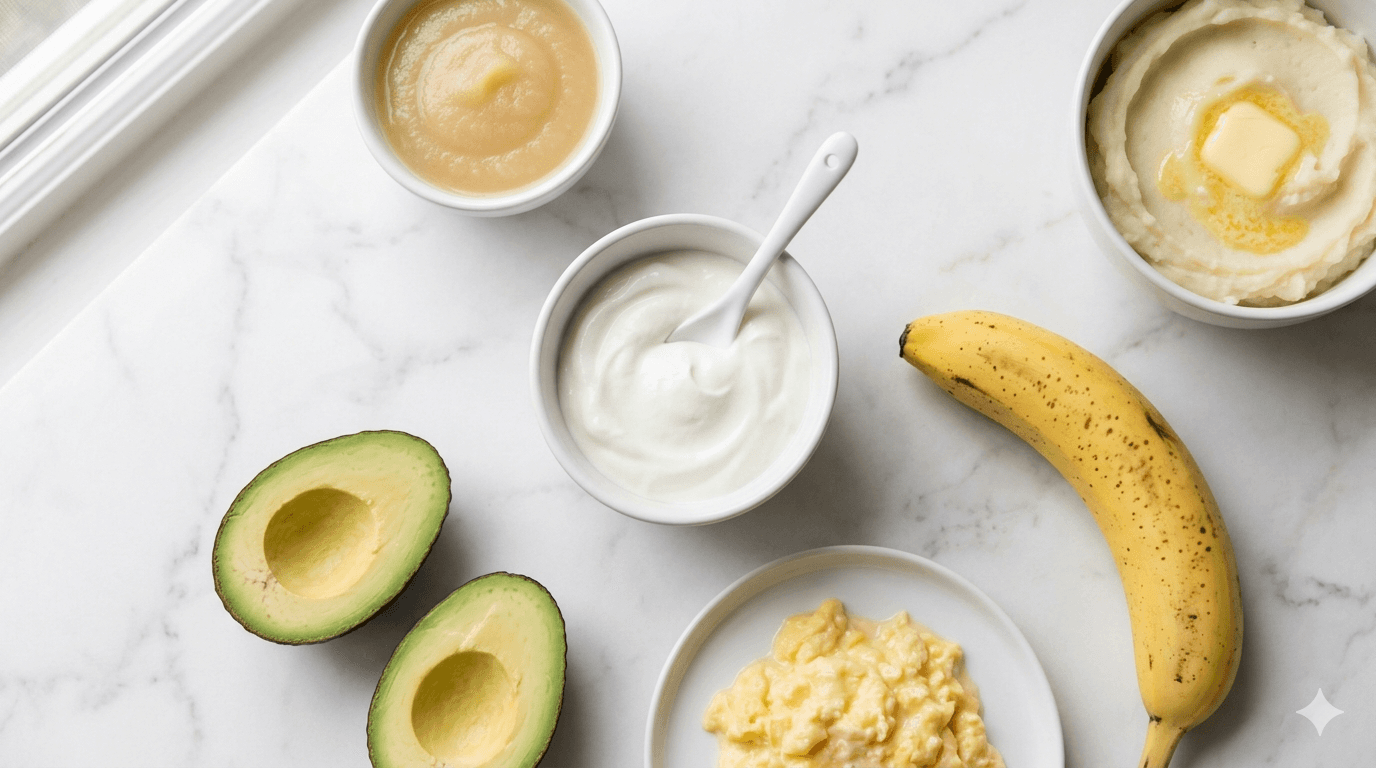
Applesauce (smooth, no chunks)
Greek yogurt (plain or lightly flavored — skip granola toppings)
Pudding or Jell-O
Ice cream or gelato (no cones, no hard mix-ins — but avoid dairy on day 1 if you had IV sedation, as it can cause nausea)
Smooth protein shakes or meal replacement drinks — consumed with a spoon or small cup, never a straw
Broth (chicken, vegetable — warm, not hot)
Mashed potatoes (smooth, not lumpy, not piping hot)
Soft scrambled eggs
Smoothies (sipped carefully from a cup or spoon — never through a straw)
Critical rule from day one: No straws. Ever. The suction created by straw use is the leading cause of dry socket — it can dislodge the blood clot protecting your healing socket. Drink directly from a cup or use a spoon. This applies for at least the first 72 hours, and ideally the full first week.
Week-by-Week Eating Plan
Days 1–2: Liquid and Semi-Liquid Only
Your mouth is still numb from local anesthesia on day one and you won't want to chew. Stick to foods that require zero chewing and create no suction.
Safe: Smooth soups (strained, no chunks), broth, apple juice, water, sports drinks (Gatorade/Pedialyte), protein shakes (no straw), applesauce, yogurt, smooth pudding, ice cream.
Skip on day 1: Dairy products if you received IV sedation — they can exacerbate sedation-related nausea. Reintroduce on day 2.
Temperature: Nothing hot. Cool or room temperature only. Heat increases blood flow and can increase bleeding risk on day one.
Hydration is critical in the first 48 hours. Drink water consistently — dehydration slows healing and can amplify headaches and fatigue post-sedation.
Days 3–4: Soft Foods Introduced
By day 3, swelling has peaked and you're ready to add slightly more texture — but chewing should still be minimal and only on the side away from the extraction sites.
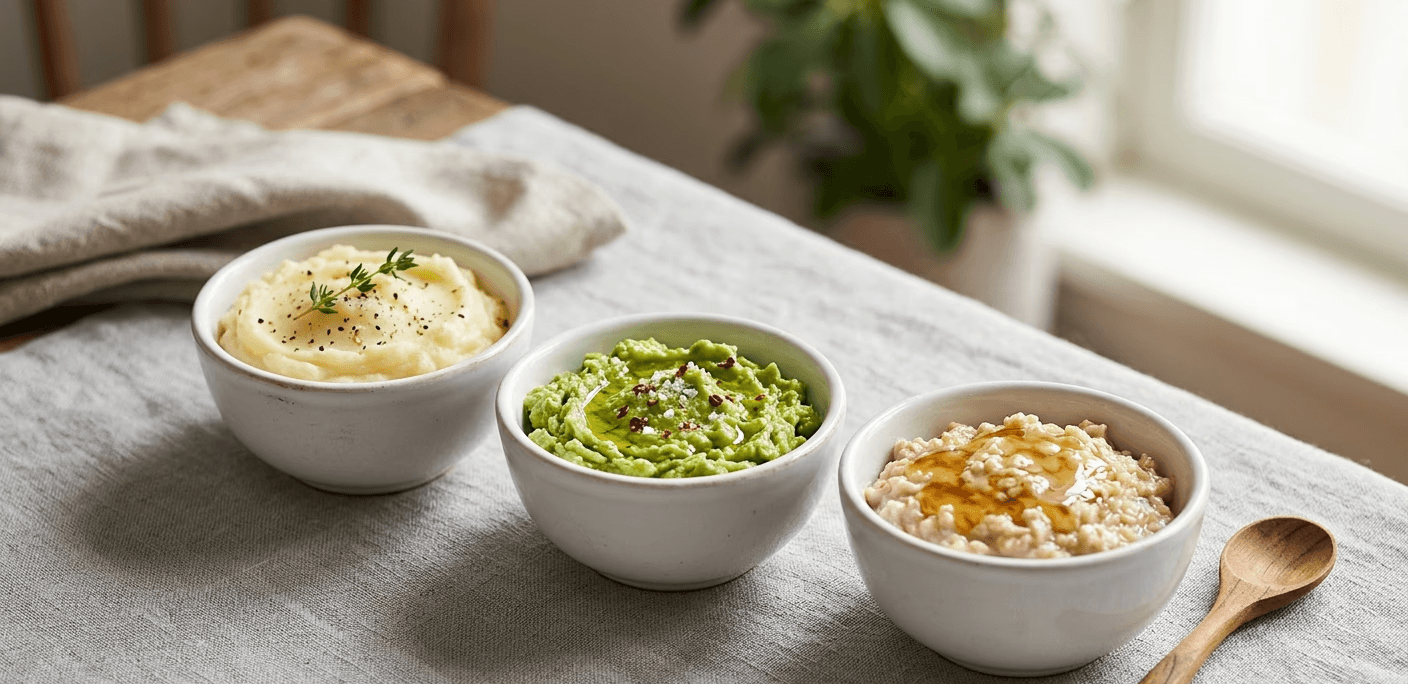
Mashed potatoes — smooth, with butter or gravy, not piping hot
Soft scrambled eggs — cooked low and slow, no crispy edges
Mashed avocado or guacamole — nutrient-dense, soft, and anti-inflammatory
Ripe banana — mash lightly before eating if needed
Oatmeal — well-cooked, smooth, not thick and chunky
Hummus — smooth variety, eaten with a spoon rather than dipped with hard chips
Soft tofu — silken or soft block, no frying
Cottage cheese — small curd, soft
Ricotta cheese with honey
Days 5–7: Expanding the Menu
Most patients turn a genuine corner by day 5. Swelling is reducing, pain is manageable without prescription medication for many, and the appetite starts to return in earnest.
Soft pasta — well-cooked, with a smooth sauce like marinara or alfredo. Avoid tough chunks of meat in the sauce.
Soft fish — tilapia, salmon, cod — baked or steamed until it flakes easily. No crispy skin.
Soft-boiled or poached eggs
Pancakes or soft waffles — no crispy edges, not overcooked
Ripe mango, peaches, or pears — either as a puree or very ripe and soft
Smoothie bowls eaten with a spoon (no granola or hard toppings)
Soft bread — white bread, brioche, or dinner rolls — no crusty sourdough or baguette
Lentil soup or split pea soup (blended smooth)
Mashed sweet potato
Week 2: A Near-Normal Diet with Caution
By day 10, most patients with uncomplicated extractions are eating a largely normal diet. The socket is still healing beneath the surface, so avoid anything that requires aggressive chewing or that could get lodged in the healing site.
Foods to still avoid in week 2:
Crunchy or hard foods — crackers, pretzels, nuts, popcorn, raw carrots
Chewy foods — gummy candy, tough steak, bagels, chewy bread
Small seeds or grains — sesame seeds, quinoa, rice (kernels can pack into the socket)
Spicy food — can irritate healing tissue
Still unsure what's safe at your stage of recovery? Call (801) 370-0050 — Mon–Fri 8am–5pm. Both Provo and Murray offices are available to answer questions.
What Absolutely Not to Eat (and Why)
Hard, Crunchy Foods
Chips, crackers, pretzels, raw vegetables, nuts, popcorn. The risk is twofold: chewing requires jaw force that stresses the surgical sites, and hard food fragments can physically lodge inside the healing socket — introducing bacteria and physical irritation.
Chewy Foods
Gummy candy, tough cuts of meat, bagels, pizza with a thick crust, beef jerky. Chewy foods require sustained jaw movement that can disrupt early wound healing and put strain on sutures or the clot.
Small Grains and Seeds
Rice, quinoa, sesame seeds, chia seeds, couscous. These small particles are notorious for packing into extraction sockets. Once lodged, they can cause infection and prevent normal healing. This is the reason you'll sometimes notice your surgeon recommends rinsing with a syringe starting around day 3–4 — to flush debris from the socket.
Alcohol
Alcohol thins the blood, interferes with prescribed pain medications and antibiotics, and disrupts the normal clotting process. Avoid completely for the first 72 hours minimum — and as long as you are taking any prescribed medications, since combining alcohol with opioids or certain antibiotics carries serious risks.
Very Hot Foods and Drinks
Heat increases blood flow to the area, which increases bleeding risk. Skip hot coffee, hot soup, and hot tea for the first 24–48 hours. Warm is fine; hot is not.
Carbonated Drinks
Carbonated beverages — soda, sparkling water, beer — create bubbles and internal pressure that can disturb the clot. This is a lesser-known risk than straws but applies by the same mechanism. Avoid for at least 3–4 days.
The Nutrition Side: Why What You Eat Actually Matters for Healing
This isn't just about avoiding complications. Your body is actively repairing tissue after surgery, and it needs the raw materials to do it efficiently. Patients who eat well during recovery — prioritizing protein, vitamins C and A, and zinc — heal measurably faster than those subsisting on ice cream alone.
Protein
Protein is the building block of tissue repair. Aim for adequate protein even on soft foods. Best sources in the soft-food window:
Greek yogurt (17–20g per cup)
Soft scrambled eggs (6g per egg)
Smooth protein shakes (20–30g per serving)
Soft fish like salmon or tilapia (20–25g per serving)
Cottage cheese (14g per half-cup)
Vitamin C
Vitamin C supports collagen synthesis — essential for wound healing. Foods: smooth applesauce (some vitamin C), mashed sweet potato, pureed mango, soft papaya, orange juice (no pulp, not through a straw).
Zinc
Zinc supports immune function and wound closure. Best soft-food sources: Greek yogurt, eggs, smooth nut butters (peanut butter or almond butter — eaten with a spoon, not on crunchy crackers).
How PRF Changes the Recovery Equation
At Dr. Wisdom Teeth, every procedure includes PRF — Platelet-Rich Fibrin — placed directly in the extraction socket at the time of surgery. PRF is made from a small sample of your own blood, concentrated into a biologically active fibrin matrix rich in growth factors and platelets.
What PRF means for your diet during recovery: the healing process begins immediately and more actively than in a standard extraction. The PRF scaffold helps stabilize the clot, reduces the risk of dry socket significantly, and supports faster tissue regeneration. This is part of why Dr. Wisdom Teeth patients generally move through the soft-food phase faster than patients who had extractions without PRF.
Practical Soft-Food Recipes That Actually Taste Good
High-Protein Smoothie Bowl (No Straw Required)
Blend: 1 cup Greek yogurt + 1 frozen ripe banana + 1 scoop vanilla protein powder + 1/4 cup milk. Pour into a bowl. Eat with a spoon. Add a drizzle of honey. Approximately 35g protein.
Buttery Mashed Sweet Potato
Microwave or bake 1 large sweet potato until very soft. Scoop out flesh, mash thoroughly with 2 tbsp butter, a pinch of cinnamon, and a drizzle of maple syrup. Smooth, nutrient-dense, and satisfying.
Soft Ricotta with Honey and Pear
Spoon full-fat ricotta into a bowl. Top with a very ripe pear, diced finely until soft and mashable. Drizzle with honey. Optional: a pinch of vanilla. Takes 2 minutes, delivers protein, calcium, and vitamin C.
Salmon with Butter Sauce (Day 5+)
Bake a salmon fillet at 375°F for 12–14 minutes until it flakes easily with a fork. Serve with a simple lemon butter sauce. Cut into very small, soft pieces. Eat only from the side of the mouth away from extraction sites.
Frequently Asked Questions
Can I have coffee after wisdom teeth removal?
Hot coffee should be avoided for the first 24–48 hours. After that, cool or lukewarm coffee is generally fine — just avoid drinking it through a straw. The heat, not the coffee itself, is the primary concern.
Can I eat ramen or instant noodles?
Soft noodles (well-cooked, not crunchy) are okay from day 3 or 4. The broth is great. The issue is if the noodles are chewy or if the soup is served very hot. Let it cool first and cut noodles into small pieces.
When can I eat a burger or pizza again?
A soft burger (no hard bun, well-cooked patty, bite-sized pieces) is reasonable by week 2 for most patients. Pizza with a thin, soft crust is similar. Skip anything with a thick chewy crust or hard, crunchy toppings for two weeks.
Is it okay to eat ice cream the day of surgery?
Yes — with one exception. If you received IV sedation, skip dairy entirely on surgery day. The sedation medications can combine with dairy to cause nausea. From day 2 onward, ice cream is one of the more popular recovery foods for good reason.
What if I'm vegetarian or vegan — how do I get enough protein?
Excellent soft protein sources for plant-based patients include: silken tofu, smooth nut butters, Greek-style coconut yogurt, lentil soup (blended smooth), edamame (mashed), and plant-based protein shakes. It takes a bit more planning but is entirely achievable.
The Bottom Line
Eating after wisdom teeth removal doesn't have to feel like punishment. The first 48 hours require care and limitation. By day 5 your options have expanded significantly. By week 2 you're largely back to normal. The decisions that matter most — no straws, no hard foods, no alcohol, prioritizing protein — are genuinely simple to follow once you know the reason behind each one.
Your surgical team at Dr. Wisdom Teeth will provide specific post-operative instructions tailored to your case. These general guidelines are a foundation; your individualized instructions take priority.
Schedule your appointment: drwisdomteeth.com | (801) 370-0050 | Mon–Fri 8am–5pmProvo: 2230 N University Pkwy #8A | Murray: 5888 S 900 E #101
Written by
Dr. Wisdom Teeth
Resources