PRF for Wisdom Teeth Removal: What It Is, How It Works, and Why It Matters
PRF (Platelet-Rich Fibrin) is included in every wisdom teeth procedure at Dr. Wisdom Teeth. Learn what it is, how it reduces dry socket risk, and why it's a clinical standard — not an upsell.
PRF wisdom teeth recovery
When patients see 'PRF Included' on the Dr. Wisdom Teeth pricing page, the most common question is straightforward: what is it? The second question is usually: is it actually useful, or is it a marketing term?
Both are fair questions. This article answers them directly — what PRF is, the biology behind how it works, what the clinical research shows about its effects on healing and dry socket prevention, and why it is a standard part of every procedure at Dr. Wisdom Teeth rather than an optional add-on.
What Is PRF? The Direct Definition
Platelet-Rich Fibrin (PRF) is a concentration of a patient's own platelets, white blood cells, and growth factors, prepared from a small blood sample drawn immediately before surgery and placed directly into the extraction socket during the procedure.
There is no foreign material, no synthetic additive, and no donor tissue. PRF is made entirely from your own biology. The preparation takes approximately 10–12 minutes and happens chairside, in the office, the day of your appointment.
PRF belongs to a family of autologous (self-sourced) platelet concentrates used across oral and maxillofacial surgery, orthopedics, dermatology, and wound care. The wisdom teeth application is among the most thoroughly studied uses.
The Biology: How Platelets Heal Wounds
To understand PRF, it helps to understand what platelets normally do during wound healing.
When tissue is injured — including the surgical trauma of an extraction — platelets in your blood rush to the site and aggregate to form a clot. This initial clot does two things: it stops bleeding (hemostasis) and it releases a cascade of growth factors that signal surrounding cells to begin repair work.
Key growth factors released by platelets include:
PDGF (Platelet-Derived Growth Factor): Stimulates the proliferation of cells needed for tissue regeneration.
TGF-β (Transforming Growth Factor Beta): Regulates inflammation and promotes extracellular matrix production — the scaffold new tissue grows on.
VEGF (Vascular Endothelial Growth Factor): Triggers the formation of new blood vessels (angiogenesis), which is essential for delivering oxygen and nutrients to healing tissue.
IGF (Insulin-Like Growth Factor): Supports cell survival and tissue differentiation during repair.
PRF concentrates all of these signals in a fibrin matrix — a structured, three-dimensional scaffold made of fibrin protein — that is then placed directly where healing needs to happen.

How PRF Is Prepared: Step by Step
A small blood sample — approximately 10–20ml — is drawn from your arm at the time of your appointment, before surgery begins.
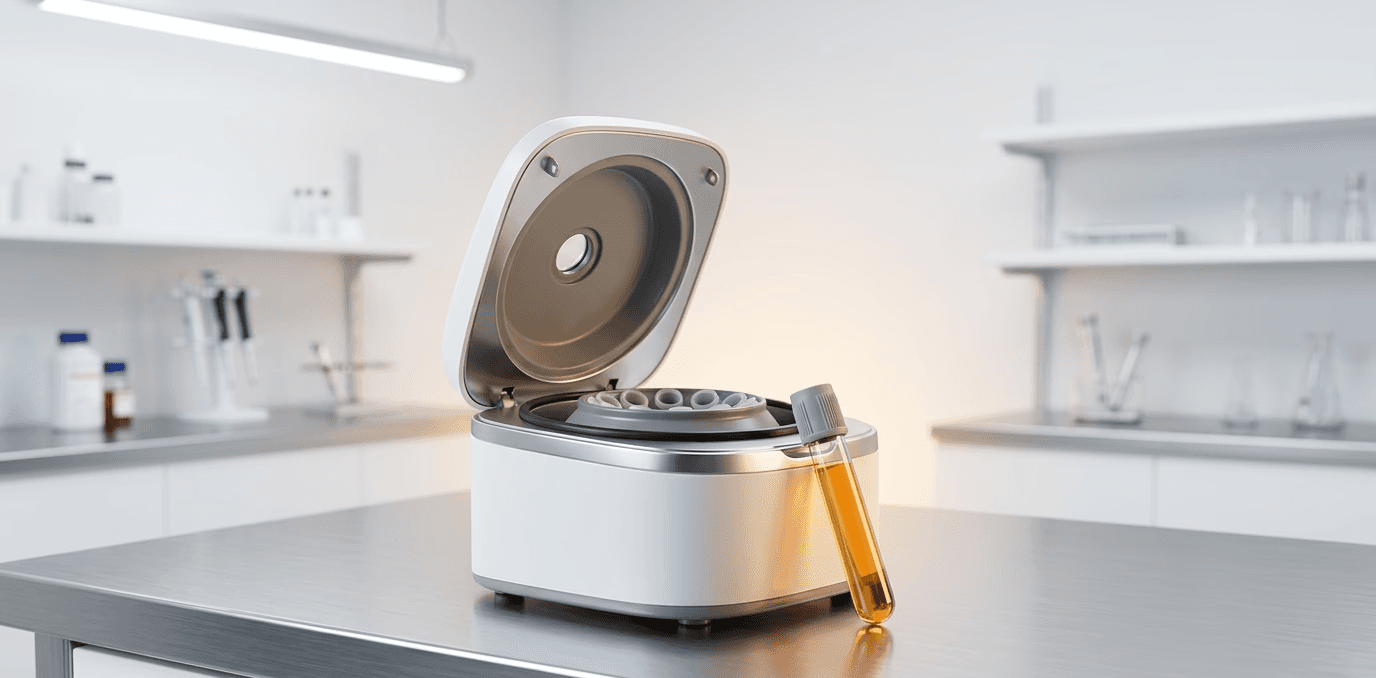
The sample is immediately placed in a centrifuge and spun at a calibrated speed for 10–12 minutes.
Centrifugation separates the blood into three distinct layers: red blood cells (bottom), the PRF layer — the buffy coat rich in platelets and fibrin (middle), and serum (top).
The PRF layer is collected and prepared as a membrane or plug — a soft, gel-like material that can be shaped and placed.
During your extraction procedure, the PRF is placed directly into each socket before the site is closed.
The entire preparation happens simultaneously with your surgical preparation. It adds no meaningful time to your appointment.
What Does PRF Actually Do Inside the Socket?
Once placed, the PRF performs several distinct functions that standard extraction healing does not include:
1. Clot Stabilization
The fibrin matrix in PRF physically reinforces the blood clot that forms naturally after extraction. A reinforced clot is significantly less likely to be disturbed or lost — reducing the primary mechanism behind dry socket (alveolar osteitis). This is the most clinically significant benefit for wisdom teeth patients.
2. Sustained Growth Factor Release
Unlike the acute platelet release that happens naturally, PRF releases its growth factors gradually over 7–14 days — the critical window for early wound healing. This sustained signal continuously recruits and activates the cells responsible for tissue regeneration throughout the healing period.
3. Anti-Inflammatory Effect
PRF modulates the local inflammatory response. The result is reduced post-operative swelling and discomfort compared to equivalent procedures without PRF. Patients who receive PRF frequently report that their recovery pain was less severe than they anticipated based on descriptions from friends or family who had wisdom teeth removed without it.
4. Accelerated Soft Tissue Closure
The PRF scaffold provides a physical surface that epithelial cells (the cells forming the new gum tissue) can migrate across and populate. Soft tissue closure over the extraction site happens more quickly when PRF is present than when healing depends solely on the native blood clot.
What the Research Shows
PRF in oral surgery has been studied extensively since its introduction in the early 2000s. Key findings relevant to wisdom teeth patients:
Multiple randomized controlled trials demonstrate statistically significant reductions in dry socket incidence when PRF is used in lower wisdom teeth extractions — the site where dry socket risk is highest.
Studies consistently show reduced post-operative pain scores at 24 and 48 hours post-extraction in PRF groups versus control groups.
Soft tissue healing and socket fill are measurably accelerated in PRF cases versus standard extraction alone, as confirmed by clinical and radiographic assessment.
PRF is classified as an autologous (self-sourced) material — no known risk of allergic reaction or immune rejection since it is derived from the patient's own blood.
Want to understand exactly what's included in your procedure before you book? Call (801) 370-0050 or visit drwisdomteeth.com — transparent pricing and no surprise charges.
PRF vs. PRP: What's the Difference?
Patients who research platelet concentrates sometimes encounter both terms — PRF and PRP (Platelet-Rich Plasma). They are related but distinct:
PRP (Platelet-Rich Plasma): An earlier-generation platelet concentrate requiring anticoagulants (typically bovine thrombin) and producing a liquid or gel. The external additives introduce foreign proteins and change the release kinetics.
PRF (Platelet-Rich Fibrin): A second-generation concentrate with no external additives. The fibrin forms naturally through centrifugation, creating a three-dimensional scaffold that releases growth factors more gradually and physiologically. It is considered the standard for contemporary oral surgery applications.
Dr. Wisdom Teeth uses PRF specifically because the fibrin scaffold architecture provides both the structural clot support and the sustained growth factor release profile most beneficial for wisdom teeth socket healing.
Why It's Included — Not Upsold
At most general dental offices where wisdom teeth removal is occasionally performed rather than exclusively focused on, PRF is either not offered at all or offered as an elective add-on at significant additional cost.
At Dr. Wisdom Teeth, PRF is included in every procedure for a straightforward clinical reason: the practice was designed from the ground up around wisdom teeth surgery specifically, and PRF is the established best practice for that procedure. Building it into the standard protocol — rather than making it an option patients choose under pressure on the day of surgery — ensures consistent outcomes and eliminates the uncomfortable dynamic of deciding whether to pay extra for something that improves your healing.
The pricing you see at Dr. Wisdom Teeth reflects the full procedure. No PRF line item added at checkout.
Who Benefits Most from PRF?
All wisdom teeth patients benefit from PRF inclusion, but the risk reduction is particularly meaningful for:
Smokers: Tobacco use significantly increases dry socket risk. PRF's clot-stabilizing effect directly counteracts some of this elevated risk (though the recommendation to abstain from smoking for 72+ hours post-surgery remains essential).
Patients with lower wisdom teeth: The mandibular (lower) socket has higher dry socket incidence than upper sites. PRF targets exactly this risk.
Patients with impacted teeth requiring surgical extraction: More complex cases involve more bone manipulation, larger sockets, and extended healing time — all scenarios where PRF's scaffold and growth factor benefits have the most impact.
Patients who want the fastest possible return to normal activity: The combination of reduced swelling, reduced pain, and faster soft tissue closure adds up to a meaningfully quicker recovery for most patients.
Frequently Asked Questions
Does PRF hurt? Is there extra discomfort from the blood draw?
The blood draw is a standard venipuncture — a small pinch when the needle is placed. Most patients report it as minor compared to the IV sedation placement they may also be receiving. The PRF itself creates no additional discomfort inside the socket; it is soft, biocompatible, and integrates naturally with the healing process.
Can I opt out of PRF if I don't want it?
PRF is a standard part of the procedure protocol at Dr. Wisdom Teeth. If you have specific concerns about any aspect of the procedure, those should be discussed during your consultation — the clinical team will address any questions directly.
How long does PRF stay in the socket?
The fibrin matrix is gradually resorbed by your body over approximately 2–4 weeks as natural tissue replaces it. You won't feel or notice this process — it happens as part of normal healing.
Is PRF covered by insurance?
Coverage for PRF varies by plan. Some dental insurance plans include it as part of the surgical benefit; others list it separately or don't cover it. Because Dr. Wisdom Teeth includes PRF in the procedure rather than billing it as a separate line item, the insurance question is simpler than when it is billed independently. The office team can provide a full breakdown of what is submitted to your insurer.
Does everyone need PRF, or is it only for complicated cases?
PRF is beneficial across all wisdom teeth extractions — simple and complex. The growth factor benefits and clot stabilization are relevant whether you're having one erupted tooth removed or four impacted teeth extracted surgically. The risk profile varies by patient and case, but there is no meaningful downside to PRF inclusion for any wisdom teeth patient.
The Bottom Line
PRF is not a premium upgrade or a marketing claim. It is an autologous platelet concentrate with an established clinical record showing reduced dry socket incidence, less post-operative pain, and faster soft tissue healing in wisdom teeth extractions. The science behind it is straightforward: your own healing biology, concentrated and delivered precisely where repair needs to happen.
At Dr. Wisdom Teeth, this is built into every procedure at both the Provo and Murray locations — because it should be.
Schedule your appointment: drwisdomteeth.com | (801) 370-0050 | Mon–Fri 8am–5pmProvo: 2230 N University Pkwy #8A | Murray: 5888 S 900 E #101

Written by
Dr. Wisdom Teeth
Resources