Wisdom Teeth Recovery Time: A Day-by-Day Guide (What's Normal vs. Not)
wisdom teeth recovery time
Wisdom teeth removal is one of the most common surgical procedures performed in the United States — millions of people go through it every year. But knowing that doesn't make the recovery feel less uncertain. How much will it hurt? When can I eat normally again? Is this swelling supposed to look like this? This guide answers all of those questions with a realistic, day-by-day breakdown of what recovery actually looks like — including what's normal, what isn't, and how to move through it as comfortably as possible.
Key Takeaways
Most patients feel significantly better within 7–10 days of surgery.
Swelling typically peaks at days 2–3, then gradually resolves over the following week.
The most common complication — dry socket — usually appears days 3–5 and is treatable.
PRF (Platelet-Rich Fibrin), included in every Dr. Wisdom Teeth procedure, measurably reduces dry socket risk and supports faster healing.
IV sedation does not extend recovery time — most sedation clears within a few hours.
Full bone and tissue healing takes 3–6 months, but you'll feel like yourself again well before that.
Before the Clock Starts: Your Day-of-Surgery Baseline
Recovery begins the moment your procedure ends. Here's what to expect as you leave the office:
You will be groggy if you had IV sedation — you need a responsible adult to drive you home and stay with you for the rest of the day.
Your mouth will be numb from local anesthesia for 2–4 hours after surgery. Do not chew during this window — you can bite your cheek or tongue without realizing it.
Gauze pads will be in place over the extraction sites. Keep firm, steady pressure on them for the first 30–45 minutes. Replace as directed if bleeding continues.
You will receive a full set of post-operative instructions. Read them carefully — they're the single most important factor in how smoothly you recover.
Day-by-Day Recovery Breakdown
Day 1: The Most Important Day
The choices you make on day one set the tone for your entire recovery. Your primary goals are: control bleeding, reduce swelling, and protect the blood clot forming in each extraction socket. That clot is your body's first step toward healing — dislodging it causes dry socket, which is genuinely painful and will extend your recovery.
Bleeding: Light to moderate bleeding or oozing is normal for several hours. Bite firmly on gauze pads. If bleeding is heavy and doesn't slow with pressure after 1 hour, call the office.
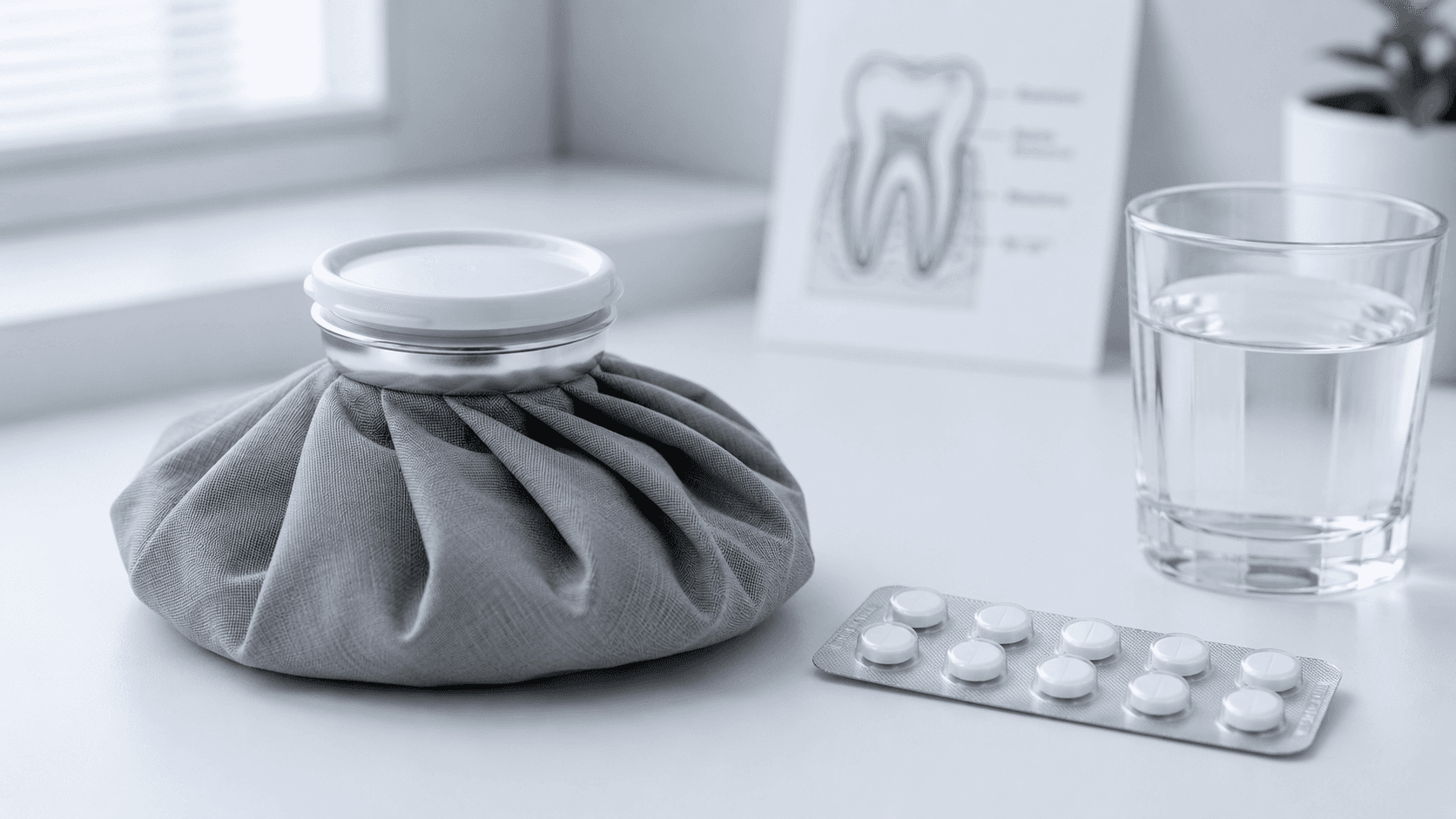
Swelling: Apply an ice pack to the outside of your jaw in 20-minutes-on / 20-minutes-off cycles for the first 24 hours. This reduces swelling and discomfort.
Food and drink: Clear liquids only to start — water, broth, apple juice, sports drinks. Avoid dairy on day 1 (it can cause nausea after sedation). No straws. No hot liquids. No alcohol.
Medications: Begin your prescribed pain medications before the local anesthesia fully wears off — don't wait until you're in pain. Take antibiotics as directed and complete the full course.
Activity: Rest completely. No exercise, no physical exertion. Keep your head elevated when lying down — use an extra pillow. Gravity matters here.
Day 2: Swelling Builds
Day 2 is often harder than day 1 for most patients. Swelling increases, jaw stiffness sets in, and the numbness from anesthesia is long gone. This is normal and expected.
Swelling is at its maximum or building toward it — this is the peak for most patients.
Switch from ice to warm, moist compresses starting on day 2 to help move swelling out.
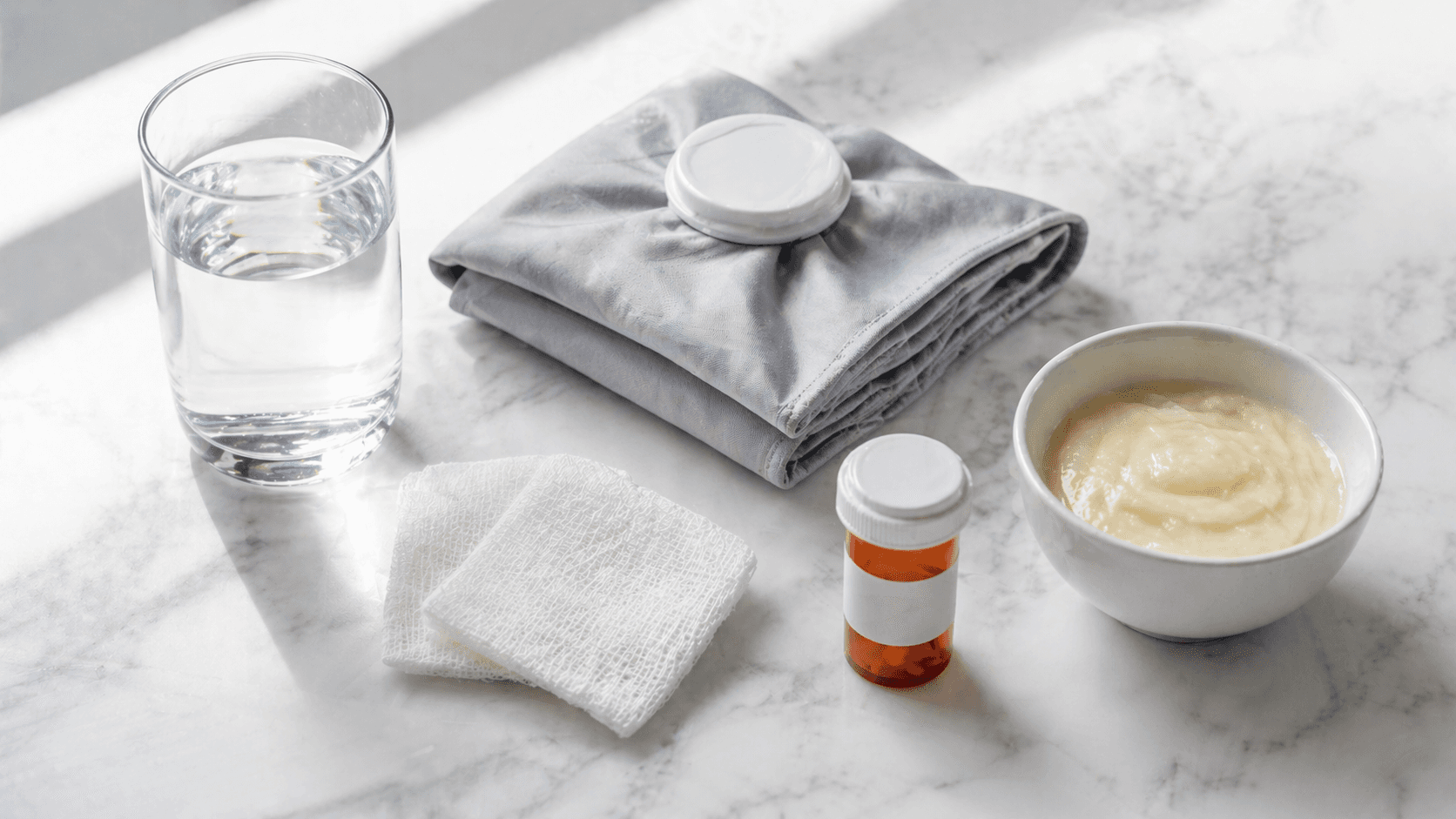
You can progress from clear liquids to soft foods: yogurt, applesauce, mashed potatoes, scrambled eggs, smoothies (no straw), soft oatmeal.
Trismus (jaw stiffness / limited opening) is common — don't force it.
Light activity is okay — short walks are fine — but avoid anything that raises your heart rate significantly.
Day 3: Swelling Peaks, Then Turns
For most patients, day 3 represents the worst of it. Swelling is at or near maximum. Pain levels are typically highest between days 2–3. After this, the trajectory improves.
Watch for dry socket: If you develop a throbbing, radiating pain that intensifies rather than improves around days 3–5, and it seems centered at one of the extraction sites (sometimes with a bad taste or odor), contact your surgeon. Dry socket is when the protective blood clot is lost or breaks down prematurely, leaving bone and nerves exposed. It's not dangerous, but it is painful and requires treatment.
PRF — Platelet-Rich Fibrin, which Dr. Wisdom Teeth includes in every procedure — directly addresses this risk. By placing a concentration of your own platelets and growth factors directly in the socket at the time of surgery, PRF supports clot stability and accelerates the tissue regeneration process.
Days 4–5: Turning the Corner
The majority of patients notice meaningful improvement starting on day 4. Swelling begins to visibly reduce. Pain becomes more manageable — many patients drop from prescription pain medication to over-the-counter options (ibuprofen or acetaminophen) around this time.
Continue soft foods but you can begin introducing slightly more textured options: soft pasta, soft fish, bananas, avocado.
Begin gentle warm saltwater rinses (8oz water + 1/2 tsp salt) 24–48 hours after surgery. Rinse gently — no vigorous swishing.
If you were prescribed an irrigation syringe, begin gentle socket flushing as instructed to keep food debris out.
Days 6–7: Most Patients Return to Light Routine
By the end of the first week, most patients with uncomplicated extractions feel well enough to return to work, school, or light daily activity. Pain at rest is typically minimal. Swelling has reduced significantly, though some residual puffiness may remain.
If you had impacted wisdom teeth requiring surgical extraction rather than simple removal, your timeline may run slightly longer — add 2–3 days to each milestone as a rough guide.
Questions about your recovery? Call us: (801) 370-0050 — Mon–Fri 8am–5pm. Both Provo and Murray offices are available.
Days 8–14: Full Return to Normal
By day 10, most patients are eating a largely normal diet (avoiding very hard, crunchy, or chewy foods for another week or two). Stitches, if placed, typically dissolve on their own within 7–10 days. Any remaining swelling or minor soreness is manageable without medication for most people.
Weeks 3–4 and Beyond: Longer-Term Healing
While you feel normal well before this point, actual tissue and bone remodeling takes longer. The soft tissue typically closes fully within 3–4 weeks. Bone healing in the socket takes 3–6 months. You won't notice or be bothered by this — but it explains why your dentist may want to check the sites at a follow-up appointment.
What's Normal vs. What Needs Attention
Normal — Don't Panic
Swelling that peaks at days 2–3 and gradually resolves
Light bruising on the jaw, neck, or cheeks
Jaw stiffness and limited opening for the first week
Mild to moderate pain managed with prescribed or OTC medications
Slight oozing or pink-tinged saliva on day 1
Small bone fragments working their way out of the socket (this can happen weeks later — normal)
Call Your Surgeon If You Experience
Pain that worsens after day 3 rather than improving — especially throbbing, radiating pain (possible dry socket)
Fever above 101°F (38.3°C)
Increasing swelling after day 3, especially with warmth and redness (possible infection)
Heavy bleeding that doesn't slow with firm pressure after 1 hour
Visible bone in the socket where the blood clot should be
Numbness lasting more than a few hours in the lip, chin, or tongue
5 Things That Meaningfully Speed Up Recovery
Follow the fasting and medication schedule exactly as given. Post-op instructions aren't suggestions.
No straws, no smoking, no spitting forcefully — for at least 72 hours, ideally a week. Suction is the primary cause of dry socket.
Keep your head elevated, especially while sleeping. Lying flat increases swelling.
Eat soft, nutrient-dense foods. Your body is repairing tissue — protein and vitamins matter. Smoothies with protein powder (not through a straw — use a spoon), mashed sweet potatoes, soft eggs, and soups are all good.
Don't poke the site with your tongue. It's tempting. Don't.
A Note on PRF and Why Recovery Is Different Here
Dry socket affects roughly 2–5% of standard wisdom teeth extractions — and up to 25–30% of patients who smoke. PRF (Platelet-Rich Fibrin) is a clinically established approach to reducing that risk significantly.
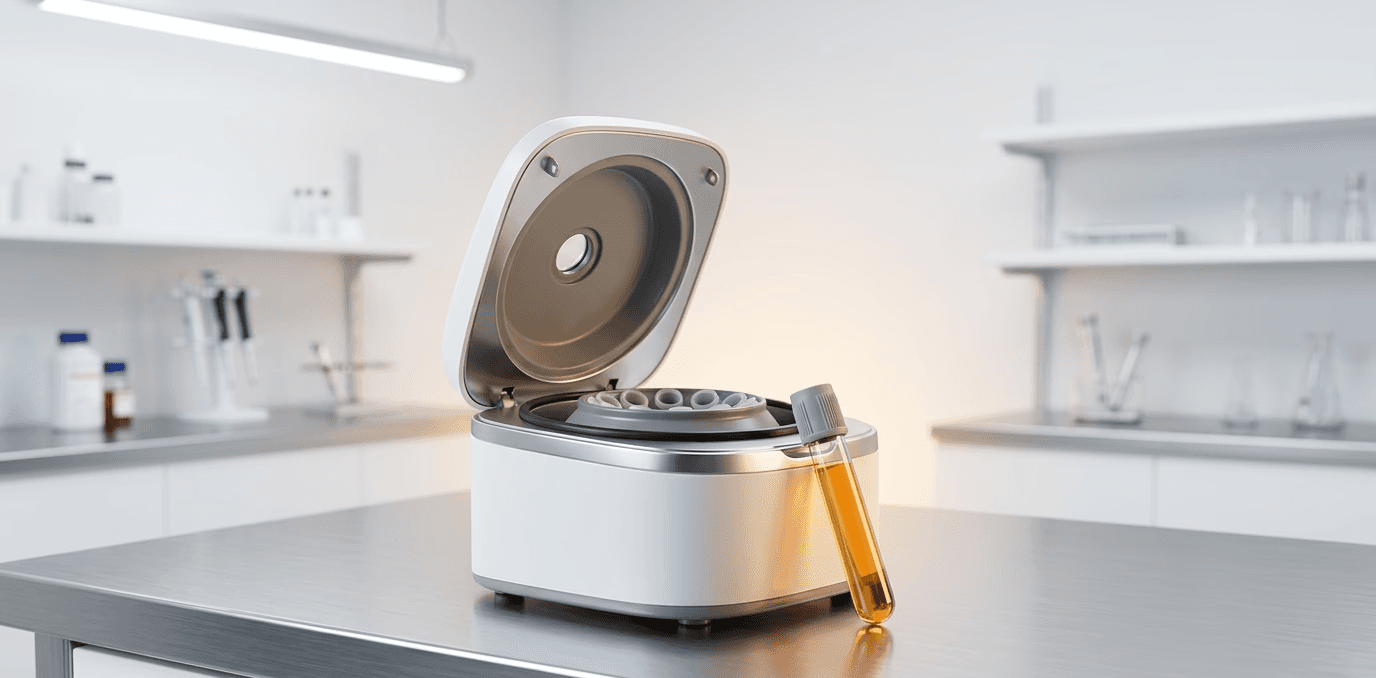
At Dr. Wisdom Teeth, PRF isn't an add-on you request. It's included in every procedure. A small amount of your own blood is drawn and spun in a centrifuge to concentrate the growth factors and platelets. The resulting material is placed directly in the socket during surgery. It forms a natural scaffold that stabilizes the clot and triggers faster tissue regeneration.
The combination of this approach with proper post-op care is why the majority of Dr. Wisdom Teeth patients move through recovery without significant complications.
Frequently Asked Questions
How long until I can eat solid food?
Most patients return to a largely normal diet — avoiding very hard or crunchy foods — by days 7–10. Progress gradually: clear liquids → soft foods (days 1–3) → semi-soft foods (days 4–7) → normal diet with care (week 2+).
Can I brush my teeth after surgery?
Yes — but carefully. Brush gently, avoid the extraction sites for the first 24 hours, and do not rinse vigorously. After 24 hours, you can begin gentle warm saltwater rinses once daily.
When can I exercise again?
Light walking is fine after day 2. Return to full exercise (running, weightlifting, sports) after 5–7 days minimum for simple extractions — longer for surgical cases. Elevated heart rate increases bleeding risk and can dislodge clots.
Why do I feel fine on day 1 but worse on day 2?
Local anesthesia is still active on day 1, masking discomfort. By day 2, it's fully metabolized and swelling peaks — which is why many patients find day 2 or 3 harder than day 1. This is completely normal.
I'm a smoker. What should I know?
Smoking significantly increases dry socket risk — the suction, heat, and chemicals all interfere with clot formation and healing. If you smoke, abstaining for a minimum of 72 hours (ideally 7+ days) after surgery is the single most impactful thing you can do to protect your recovery.
The Bottom Line
Wisdom teeth recovery is predictable when you know what to expect. The discomfort peaks at days 2–3, most patients turn a clear corner by day 4–5, and the majority feel back to normal within 7–10 days. The steps that matter most — protecting the blood clot, following post-op instructions, and not doing too much too soon — are genuinely simple.
If something feels off at any point in your recovery, the Dr. Wisdom Teeth team is available to answer questions at both the Provo and Murray locations.

Written by
Dr. Wisdom Teeth
Resources